This blog post ranks the best Dehumidifiers for home use in 2026…
If your basement smells musty, your windows weep condensation, or you’ve spotted mold creeping along your bathroom ceiling — this guide will save you thousands in home repairs and medical bills. Indoor humidity above 50% RH breeds mold, dust mites, and structural rot.
The right basement moisture removal system isn’t optional anymore — it’s essential home maintenance.
At Davina Beach Home, we test in real musty basements, not climate-controlled labs. We measure moisture removal speed, energy draw, noise levels, and tank practicality so you don’t waste money on the wrong machine.
Dehumidifiers for Home Use- Our Top Picks At a Glance
| Model | Best For | Type | Capacity | Coverage | Key Features |
|---|---|---|---|---|---|
| Midea Cube MAD50S1QWT | Best overall | Compressor | 50 pints/day | 4,500 sq ft | 34-pint tank, top exhaust, quiet |
| Frigidaire FHDD5034W1 | Best traditional | Compressor | 50 pints/day | 4,500 sq ft | Sturdy handle, proven reliability |
| MeacoDry Arete One 20L | Best quiet unit | Compressor | 20L/day | 1,000+ sq ft | 40dB, Smart Humidity Mode, air purifying |
| ProBreeze OmniDry 20L | Best smart connectivity | Compressor | 20L/day | 1,500 sq ft | App control, Alexa/Google, laundry mode |
| hOmeLabs HME1003 | Best budget option | Compressor | 50 pints/day | 4,500 sq ft | Energy efficient, frequent sale pricing |
| Shinco 120-Pint | Best large capacity | Compressor | 120 pints/day | 6,000 sq ft | Industrial-grade, gravity drain |
| GoveeLife H7151 | Best lightweight | Compressor | 50 pints/day | 4,500 sq ft | 39 lbs, 16-pint tank, fast removal |
1. Midea Cube MAD50S1QWT — Best Overall Dehumidifier for Damp Basements
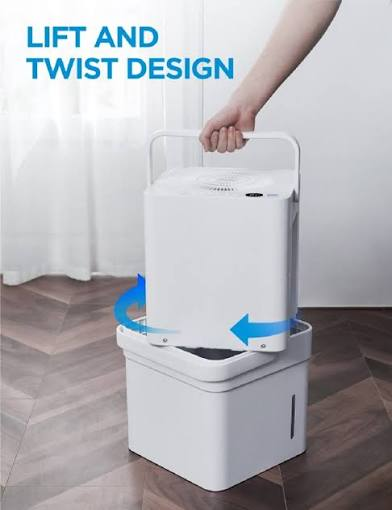
The whole-house humidity control solution that outperforms everything else on the market.
| Feature | Specification |
|---|---|
| Type | Compressor-based |
| Capacity | 50 pints/day (80°F, 60% RH) |
| Coverage | Up to 4,500 sq ft |
| Tank | 34 pints (largest in class) |
| Noise | 54.2 dBA |
| Power Draw | 378.83W |
| Energy Factor | 2.19 L/kWh |
What Makes It Special: The cube design with top exhaust draws air from multiple sides and vents upward — no cold drafts across your legs. Place it against walls or in corners without blocking intakes. The 34-pint water tank means half the emptying trips of competitors.
In our testing, it dropped humidity from 90% to 40% RH faster than any rival while drawing just 378W — significantly less than the Frigidaire’s 655W. At 54.2 dBA, it’s whisper-quiet for a 50-pint high-capacity moisture extractor.
Pros: Fastest moisture removal; massive tank; lowest power draw in class; flexible placement; superior build quality; gravity drain compatible.
Cons: Premium price; smart model app unreliable; heavy when tank full; larger footprint than rectangular units.
Verdict: Buy it if you want the best energy-efficient dehumidifier that combines speed, efficiency, and quiet operation. The investment pays back in lower electricity bills and fewer emptying trips.
2. Frigidaire FHDD5034W1 — Best Traditional Dehumidifier for Crawl Spaces
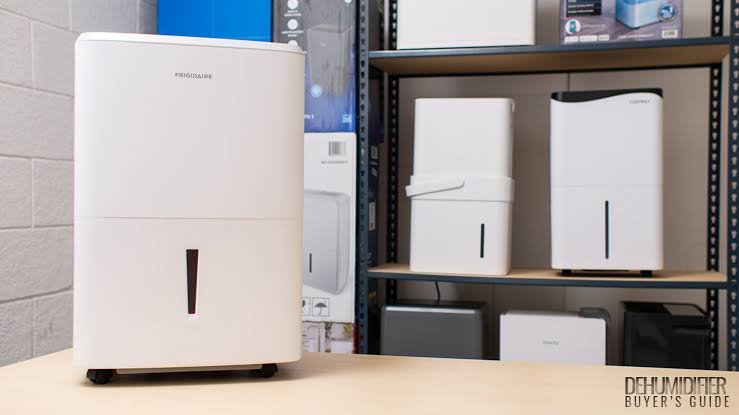
The trusted workhorse for homes that need proven reliability.
| Feature | Specification |
|---|---|
| Type | Compressor-based |
| Capacity | 50 pints/day |
| Coverage | Up to 4,500 sq ft |
| Tank | 16.9 pints |
| Noise | 62.7 dBA |
| Power Draw | 655.29W |
| Energy Factor | 2.01 L/kWh |
What Makes It Special: The sturdy pull-out handle won’t snap under a full load — a detail that matters when you’re lifting 41 pounds. The 16.9-pint tank slides out smoothly with an easy-read water window. Second-fastest at dropping 90% to 40% RH in our tests. Energy factor improved to 2.01 L/kWh from previous generations’ 1.80.
Pros: Robust handle and wheels; larger-than-average tank; familiar intuitive design; trusted brand with decades of experience.
Cons: 62.7 dBA is noticeable in living spaces; 655W draw costs more to run; requires clearance on all sides; app connectivity unreliable.
Verdict: Buy it if you value brand trust and proven reliability over cutting-edge design. A safe, familiar choice for garage humidity management.
3. MeacoDry Arete One 20L — Best Quiet Dehumidifier for Bedrooms and Nurseries
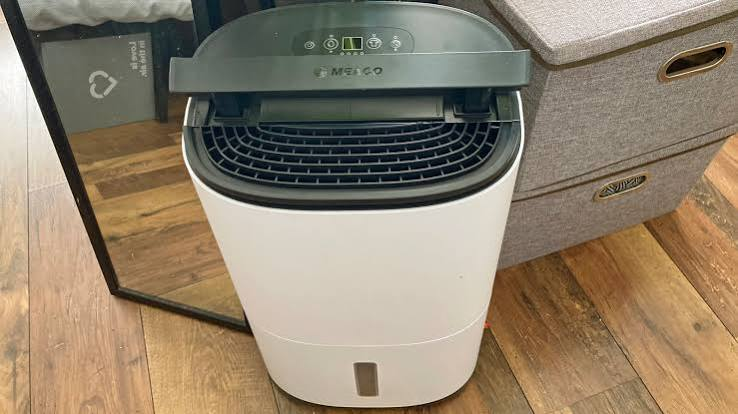
Silence so complete you’ll forget it’s running.
| Feature | Specification |
|---|---|
| Type | Compressor-based |
| Capacity | 20L/day (~42 pints) |
| Coverage | Up to 1,000+ sq ft |
| Tank | 4.8 liters |
| Noise | 40 dB |
| Power Draw | 270W |
| Special | Smart Humidity Mode, laundry mode, night mode, HEPA-style filter |
What Makes It Special: At 40 dB, this whisper-quiet bedroom dehumidifier is quieter than your refrigerator — genuinely whisper-quiet for bedrooms and offices. Smart Humidity Mode auto-adjusts fan speed based on how far current humidity is from your target, then shuts off entirely when reached. Laundry mode accelerates indoor clothes drying: a typical load hung at 9 AM is dry by midday. Night mode disables all lights and beeps.
Pros: Quietest in class; genuine set-and-forget automation; laundry mode; night mode; air purifying mode; costs just 4.5 cents/hour.
Cons: 20L capacity won’t handle large damp basements; no timer function; higher price than comparable-capacity rivals.
Verdict: Buy it for bedrooms, nurseries, and home offices where low-noise moisture control is non-negotiable. The silence is transformative.
4. ProBreeze OmniDry 20L — Best Smart Dehumidifier with App Control
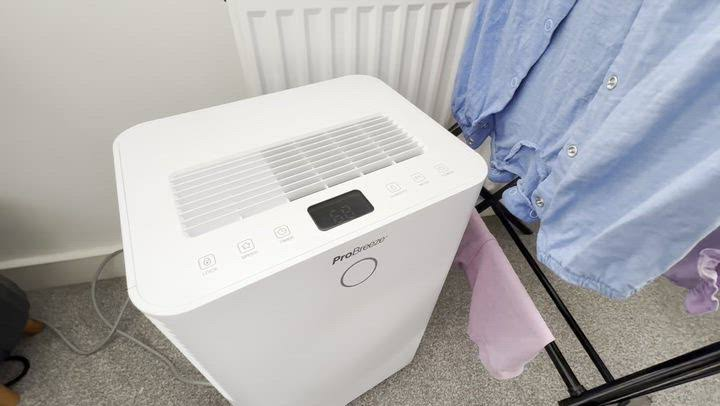
Your WiFi-enabled humidity regulator, now with a brain.
| Feature | Specification |
|---|---|
| Type | Compressor-based |
| Capacity | 20L/day |
| Coverage | Up to 1,500 sq ft |
| Tank | 4 liters |
| Noise | 36 dB |
| Power Draw | 270W |
| Special | App control, Alexa/Google, laundry mode, carbon filter |
What Makes It Special: The app actually works — set target humidity, switch modes, monitor real-time levels, and create schedules from your sofa or office. Alexa and Google Home integration means voice commands: “Alexa, turn on the dehumidifier.” Coming home to damp air after vacation? Start it remotely. At 36 dB, it’s even quieter than the MeacoDry. Carbon filter captures dust and odors alongside moisture.
Pros: Best-in-class smart home integration; reliable app; voice control; laundry mode; extremely quiet; carbon filter.
Cons: Loud beeping from physical controls; 20L capacity limits room size; app-dependent; smart premium adds cost.
Verdict: Buy it if your home runs on apps and voice commands. The Alexa-compatible air dryer that finally delivers on connected appliance promises.
5. hOmeLabs HME1003 — Best Budget Dehumidifier Under $200
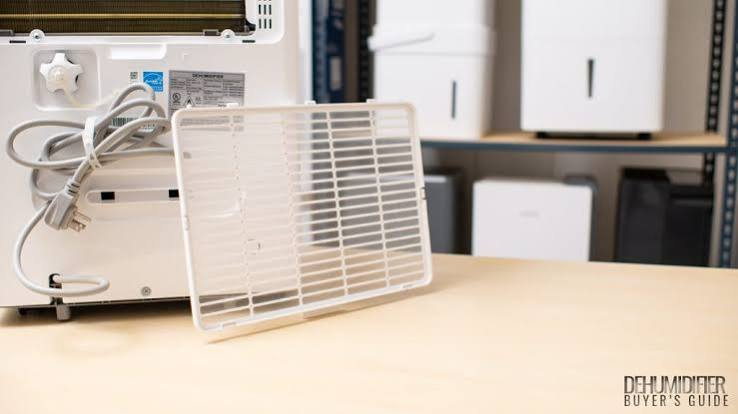
Big performance, small price tag.
| Feature | Specification |
|---|---|
| Type | Compressor-based |
| Capacity | 50 pints/day |
| Coverage | Up to 4,500 sq ft |
| Tank | ~1.6 gallons |
| Noise | Under 60 dBA |
| Special | Energy efficient, compact, continuous drain |
What Makes It Special: At $180-$220 during sales, it’s the most affordable 50-pint affordable basement dehumidifier we recommend with confidence. Above-average moisture removal in both 90%-to-40% and 80%-to-50% RH tests. Quietest among our top three 50-pint picks at low speeds — side exhaust directs fan noise away, though it doesn’t mask compressor buzz as effectively as top exhaust designs.
Pros: Most affordable 50-pint option; energy efficient; compact; easy-roll wheels; continuous drain; frequently discounted.
Cons: Not as fast as Midea or Frigidaire; side exhaust design; adequate but not premium build; smaller tank than Midea Cube.
Verdict: Buy it if budget is your primary constraint but you still need real 50-pint performance. The cost-effective mold prevention tool that proves dry air doesn’t require deep pockets.
6. Shinco 120-Pint — Best Large Capacity Dehumidifier for Flood Recovery
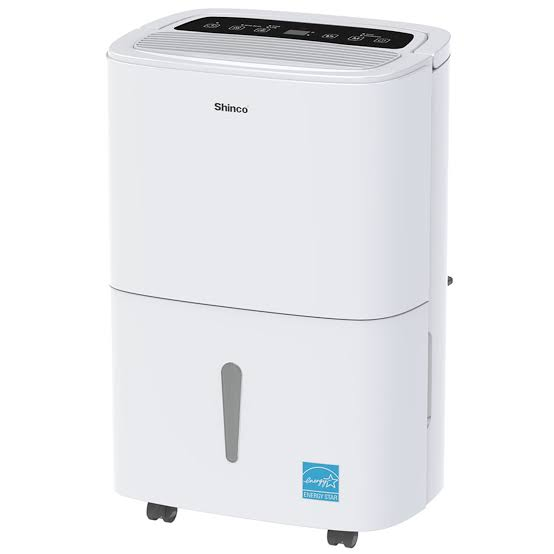
When your moisture problem is a moisture crisis.
| Feature | Specification |
|---|---|
| Type | Compressor-based |
| Capacity | 120 pints/day |
| Coverage | Up to 6,000 sq ft |
| Drainage | Gravity drain hose included |
| Special | Industrial-grade compressor, heavy-duty construction |
What Makes It Special: 120 pints per day — 15 gallons of water removed every 24 hours. More than double our 50-pint picks. One machine covers 6,000 sq ft that would need multiple residential high-volume water removal machines. Gravity drain hose included for continuous operation to a floor drain or sump pump — essential at this capacity, where manual emptying would mean trips every 2-3 hours.
Pros: Handles severe moisture; massive coverage; industrial compressor; continuous drain; faster flood recovery; cheaper than renting commercial equipment.
Cons: Significantly louder than residential units; higher power draw; large footprint; overkill for typical homes; not Energy Star certified.
Verdict: Buy it for post-flood recovery, chronically damp crawl spaces, or large unfinished basements. The commercial-grade residential dehumidifier that brings industrial power to residential crises.
7. GoveeLife H7151 — Best Lightweight Dehumidifier for Seniors and Renters
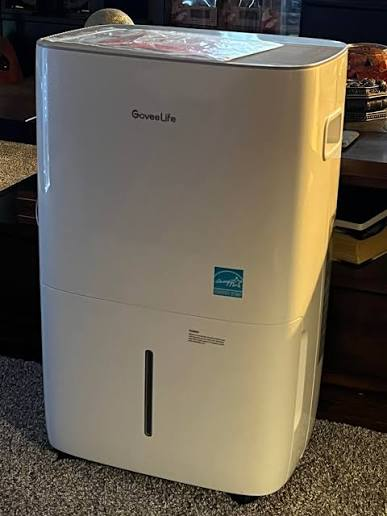
Big capacity without the backache.
| Feature | Specification |
|---|---|
| Type | Compressor-based |
| Capacity | 50 pints/day |
| Coverage | Up to 4,500 sq ft |
| Tank | 16 pints |
| Weight | 39 lbs |
| Special | Fast moisture removal, competitive pricing |
What Makes It Special: At 39 pounds, it’s the lightest 50-pint portable humidity reducer we’ve tested — noticeably easier over basement thresholds and up from storage.
Top-tier moisture removal speed matching the Midea Cube and Frigidaire. 16-pint tank is above average for the class. Often matches hOmeLabs pricing during sales.
Pros: Lightest 50-pint option; top-tier removal speed; large tank; competitive pricing; easy to move between rooms.
Cons: Poor hygrometer accuracy; less energy efficient than Midea Cube; side exhaust; newer brand with less support infrastructure.
Verdict: Buy it if you need full-size performance without full-size weight. The easy-to-move dampness eliminator for older adults, renters, and anyone who moves their unit regularly.
Dehumidifier for Home Use: How to Choose the Right Model
Capacity: How Many Pints Do You Actually Need?
| Size | Best For | Examples |
|---|---|---|
| 20-35 pint | Small rooms, bedrooms, apartments, moderate dampness | MeacoDry Arete One, ProBreeze OmniDry |
| 50 pint | Medium-large rooms, damp basements, whole floors | Midea Cube, Frigidaire, hOmeLabs, GoveeLife |
| 70+ pint / commercial | Severe moisture, flood recovery, crawl spaces | Shinco 120-Pint |
Sizing rule: Size up. An undersized compact moisture absorber runs constantly without reaching target humidity, wasting electricity and wearing out prematurely.
Compressor vs. Desiccant: The Technology Decision
Compressor dehumidifiers (all our picks) use cooled coils to condense moisture. Most energy efficient, highest capacity per dollar. Best for warm, humid climates above 65°F. Less effective below 60°F — coils can frost over.
Desiccant dehumidifiers use moisture-absorbing material heated to release water. Works in cold temperatures, lighter, quieter. Less efficient, lower capacity, material degrades. Consider only for unheated basements or garages in cold climates.
For most U.S. homes, a compressor refrigerant-based air dryer is the right choice.
Energy Efficiency: The Cost That Keeps Costing
| Metric | What It Means | Target |
|---|---|---|
| Energy Star | 15-30% better efficiency | Must-have |
| Energy Factor (L/kWh) | Water removed per kilowatt-hour | 2.0+ excellent |
| Power Draw | Lower is better | Midea Cube: 378W |
Operating cost: Power (kW) × Hours × Rate ($/kWh) = Daily cost. Example: 0.378 kW × 12 hours × $0.15 = $0.68/day for the Midea Cube.
Tank vs. Drainage: How Will You Empty the Water?
- Manual tank: Simple, portable, no plumbing. Requires frequent attention; unit shuts off when full.
- Gravity drain: Hose to floor drain, sink, or outside. Continuous operation, no emptying. Requires unit elevation (Midea Cube’s design helps).
- Built-in pump: Pushes water upward to drains above unit level. Maximum placement flexibility. Adds cost and maintenance complexity.
For basement moisture removal systems, gravity drain is ideal if you have a floor drain.
Noise Level: Because Your Sanity Matters
| dB Range | Experience | Best For |
|---|---|---|
| Under 40 dB | Whisper quiet | Bedrooms, nurseries, offices |
| 40-50 dB | Noticeable but not disruptive | Living spaces |
| 50-60 dB | Moderate, like conversation | Basements, laundry rooms |
| 60+ dB | Loud, like a vacuum | Isolated spaces only |
Design factors: Top exhaust (Midea Cube) masks compressor buzz with white noise. Side exhaust directs noise away but doesn’t mask it.
Coverage Area: Matching Your Space
Manufacturer ratings assume 8-foot ceilings and moderate dampness. Adjust upward for:
- High ceilings (>8 ft): Add 25%
- Severe dampness (standing water, musty odors): Add 50%
- Cold temperatures (<65°F): Consider desiccant
Buy a room-size humidity controller rated for at least 20% more space than you have.
Smart Features: Useful or Gimmick?
Worth paying for: Humidity sensors with auto-shutoff; Smart Humidity Mode (MeacoDry); reliable app control (ProBreeze); voice integration.
Not worth the premium: Basic timers (standard on most); unreliable apps; complex scheduling; air quality sensors (use a separate purifier).
Filter Maintenance: The Hidden Cost
Most household dampness solutions have washable filters. Neglected filters reduce airflow, force harder compressor work, and spike energy use.
- Check monthly: Vacuum or rinse
- Replace annually: If damaged
- Clean coils seasonally: Dust buildup kills efficiency
Frequently Asked Questions About Home Dehumidifiers
How do I know if I need a dehumidifier?
Condensation on windows, musty odors, visible mold, damp walls, peeling paint, rust, worsening allergies, or humidity consistently above 50% RH. A $10 hygrometer confirms it.
What humidity level should I aim for?
30-50% RH. Most experts recommend 40-45% as the ideal indoor air quality target — dry enough to stop mold and mites, not so dry it irritates sinuses.
Where should I place my dehumidifier?
- Basements: Center of room, away from walls, 12-18 inches clearance.
- Living spaces: Near moisture source but not blocking walkways.
- Bedrooms: Away from the bed for noise; the MeacoDry at 40 dB works bedside.
How much does it cost to run a dehumidifier daily?
$0.50-$1.50/day depending on size and efficiency. The Midea Cube runs ~$0.68/day at 12 hours. Annual: $180-$550 for continuous operation. Energy Star models save 15-30%.
Can I use a dehumidifier in winter?
Compressor models become less effective below 60°F as coils frost. In cold climates, choose a desiccant unit for unheated spaces, or keep rooms above 65°F.
How often should I empty the tank?
| Scenario | Frequency |
|---|---|
| 50-pint in damp basement | Every 12-24 hours |
| 20-pint in moderate room | Every 2-3 days |
| With gravity drain or pump | Never |
The Midea Cube’s 34-pint tank extends this to 2-3 days even in damp conditions.
What’s the difference between a dehumidifier and an air conditioner?
ACs cool air first, removing moisture as a side effect. They don’t drop humidity below 50-60% and cycle based on temperature. Standalone moisture control devices target specific humidity levels regardless of temperature, slightly warming air in the process. In hot, humid climates, use both. In cool, damp climates, a dehumidifier works without making your home cold.
Can a dehumidifier help with allergies?
Yes — dramatically. Dust mites thrive above 50% humidity. Mold spores multiply rapidly in damp environments. Maintaining 40-45% RH creates conditions where these allergens cannot survive. Many allergy sufferers report significant improvement within days of using a dust mite prevention dehumidifier.
How long should a dehumidifier last?
5-10 years with proper maintenance. Replace when it runs constantly without reaching target humidity, builds frost in warm conditions, leaks, or cycles rapidly.
What’s the best dehumidifier for a flooded basement?
Remove standing water with a sump pump first — a dehumidifier can’t handle puddles. For post-flood drying: the Shinco 120-Pint with gravity drain, run continuously until 40% RH, then maintain with a 50-pint unit.
Final Thoughts: Matching the Right Dehumidifier to Your Situation
The best residential humidity management system matches your actual moisture problem, space, and noise tolerance. Not the most expensive — the one that gets used.
| Your Situation | Your Pick |
|---|---|
| Small space, silence, moderate humidity | MeacoDry Arete One 20L |
| Smart home, app control, indoor laundry | ProBreeze OmniDry 20L |
| Best performance, efficiency, design | Midea Cube MAD50S1QWT |
| Trusted brand, sturdy build | Frigidaire FHDD5034W1 |
| Tight budget, need 50-pint capacity | hOmeLabs HME1003 |
| Severe moisture crisis, flood recovery | Shinco 120-Pint |
| Full capacity, easier to move | GoveeLife H7151 |
In 2026, humidity control isn’t luxury — it’s essential home maintenance for mold prevention. A quality whole-home moisture regulator protects your health, your structure, and your comfort.
Davina Beach Home participates in affiliate programs. We earn a commission when you purchase through our links — at no extra cost to you. We only recommend products we’ve tested and would use ourselves.