You’ve heard whispers about handheld laser welding, and you’re wondering which laser welder for home use actually deserves your garage space and your savings in 2026.
This guide is for you.
These are the 7 laser welders for home use that actually deserve your garage space, your electrical panel’s capacity, and your money in 2026—tested, compared, and ranked by people who understand that your home fabrication setup needs to be effective, safe, and built to last.
Our Top Picks at a Glance- Laser Welders for Home Use
| Rank | Product | Best For | Price Range | Key Highlight |
|---|---|---|---|---|
| #1 | LightWeld 1500 by IPG Photonics | Serious home fabricators & small business | $$$$ | 1500W fiber laser, wobble welding, industrial pedigree |
| #2 | Han’s Laser HW-1500 | Budget-conscious prosumer makers | $$$ | 1500W handheld, wire feed, Chinese quality leader |
| #3 | Raycus 1000W Handheld Laser Welder | Entry-level home metalworkers | $$ | 1000W fiber, affordable entry, proven reliability |
| #4 | JPT 1500W MOPA Laser Welder | Precision & color-marking needs | $$$ | MOPA source, adjustable pulse, multi-material |
| #5 | Baison Laser 1000W Handheld | Garage workshops with space constraints | $$ | Compact chiller, lightweight gun, easy setup |
| #6 | MAX 1500W Fiber Laser Welder | High-volume home production | $$$ | 1500W, dual wire feed, auto wire cutting |
| #7 | Cloudray 1000W Desktop Laser Welder | Benchtop jewelry & small repair | $$ | Desktop footprint, precision joints, jewelry-grade |
Best Laser Welders for Home Use: In-Depth Reviews
1. LightWeld 1500 by IPG Photonics — The Industrial Legend at Home
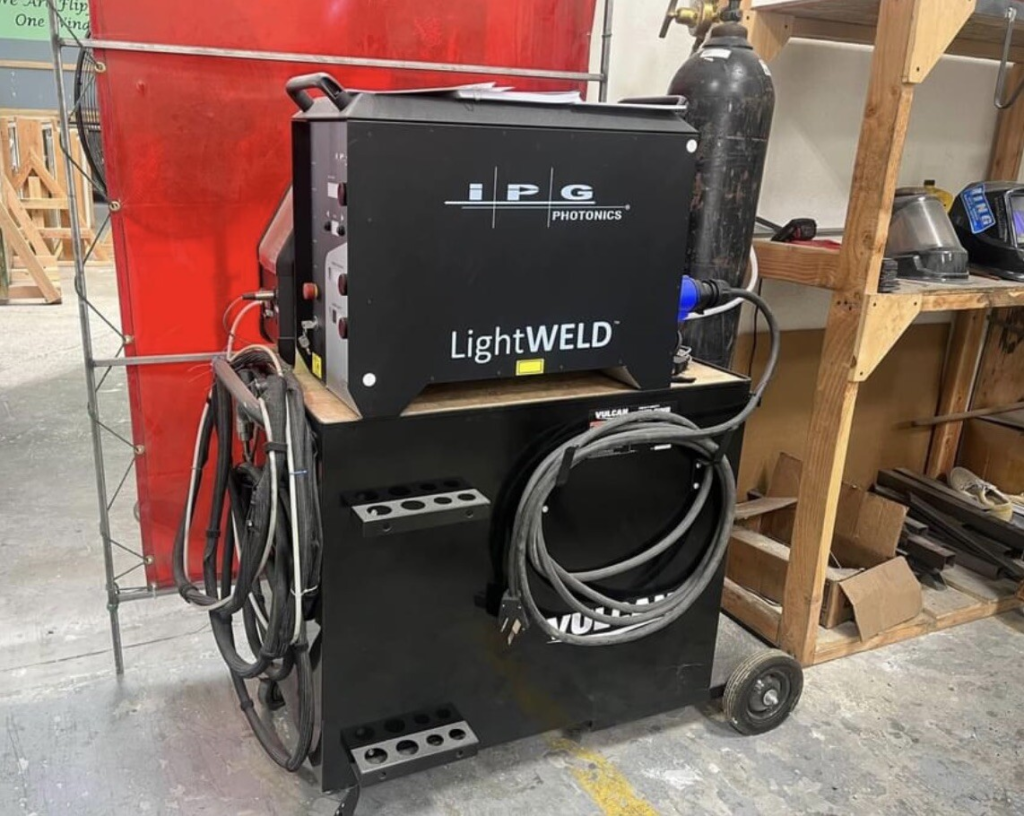
Best for: Serious home fabricators, small business owners, automotive restorers, and anyone who wants a genuine industrial DNA.
If there is one name that dominates the fiber laser world, it is IPG Photonics. The LightWeld 1500 isn’t just popular—it is the benchmark against which every other is measured. It is the machine that makes aerospace engineers nod in approval.
Specs & Key Details
| Feature | Specification |
|---|---|
| Laser Source | IPG Ytterbium fiber laser, 1070 nm wavelength |
| Power | 1500W continuous wave |
| Welding Modes | Continuous, pulse, wobble (oscillation) |
| Wire Feed | Integrated automatic wire feeder (0.8–1.2 mm) |
| Materials | Stainless steel, carbon steel, aluminum, titanium, copper |
| Penetration Depth | Up to 4 mm on stainless steel |
| Chiller | Integrated industrial chiller unit |
| Weight (gun) | 1.8 lbs (lightest in class) |
| Power Requirements | 220V single-phase, 30A breaker |
| Warranty | 2-year limited (laser source), 1-year system |
What Makes It Special
The wobble welding mode is the game-changer. By oscillating the laser beam in a circular pattern, the LightWeld bridges gaps up to 2 mm without filler wire, creates wider beads for better joint strength, and reduces porosity in aluminum welding.
The IPG laser source is the same found in automotive production lines—meaning 100,000+ hour diode life and beam quality that doesn’t degrade.
this industrial pedigree means you’re buying a tool that outlasts your projects.
Pros
- IPG laser source is the gold standard for fiber lasers globally
- Wobble welding bridges gaps and eliminates porosity issues
- Lightest welding gun at 1.8 lbs—hours of fatigue-free work
- Integrated wire feed with automatic wire cutting
- Intuitive touchscreen requires no PhD to operate
Cons
- Premium price—the most expensive on this list
- 220V 30A requirement may need electrical panel upgrade
- Large chiller unit demands dedicated floor space
- Learning curve for wobble settings optimization
- Overkill for occasional hobbyist use
Should You Buy It?
Yes—if you’re running a small fabrication business from your garage, restoring classic cars professionally, or simply refuse to compromise on quality.
This laser welder for home use is for the maker who sells their work, the restorer who needs concours-quality joints, or the entrepreneur prototyping products that will eventually scale.
The IPG source alone justifies the price—cheaper lasers degrade, drift, and fail. This one won’t. For anyone who welds weekly and earns from it, the LightWeld 1500 is the only logical choice.
2. Han’s Laser HW-1500 — The Prosumer Powerhouse
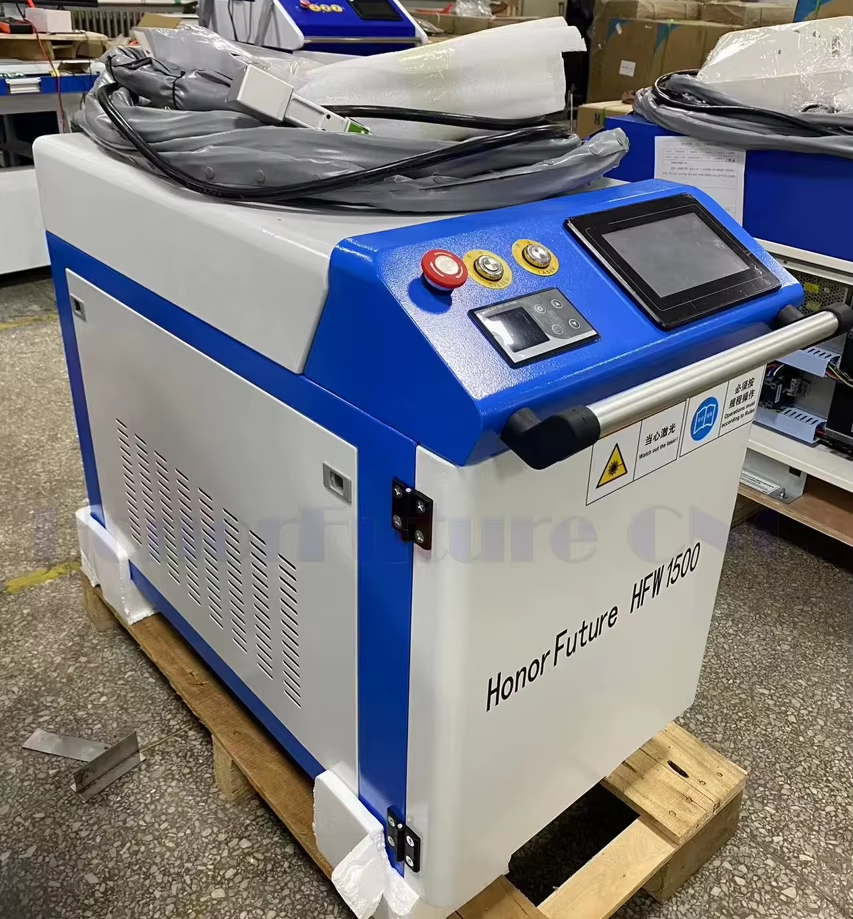
Best for: Advanced hobbyists, makerspaces, small fabrication shops, and anyone who wants 1500W capability without the IPG price premium.
Han’s Laser is China’s largest laser equipment manufacturer, and the HW-1500 brings that scale and R&D into the prosumer market.
This blurs the line between imported industrial and accessible professional.
Specs & Key Details
| Feature | Specification |
|---|---|
| Laser Source | Raycus or JPT fiber laser (configurable), 1070 nm |
| Power | 1500W continuous wave |
| Welding Modes | Continuous, pulse, wobble, spot |
| Wire Feed | External automatic wire feeder (0.8–1.6 mm) |
| Materials | Stainless steel, carbon steel, aluminum, brass, copper |
| Penetration Depth | Up to 3.5 mm on stainless steel |
| Chiller | External industrial chiller (included) |
| Weight (gun) | 2.4 lbs |
| Power Requirements | 220V single-phase, 32A breaker |
| Warranty | 2-year limited (laser source), 1-year system |
What Makes It Special
The configurable laser source lets you choose Raycus (proven reliability, lower cost) or JPT MOPA (advanced pulse control, better for reflective metals). The external wire feeder handles up to 1.6 mm wire—thicker than the LightWeld’s 1.2 mm max—meaning better gap-filling on rough-cut joints.
Flexibility is genuinely valuable: optimize for your specific materials without buying multiple machines.
Pros
- Configurable laser source matches budget to application
- Thicker wire compatibility (1.6 mm) for rougher joints
- 1500W at prosumer price—roughly 40% less than IPG
- Wobble and spot modes handle diverse applications
- Strong Chinese support network with US/EU service centers
Cons
- Heavier gun at 2.4 lbs—fatigue during long sessions
- External chiller takes more space than integrated units
- Quality variance between Raycus and JPT configurations
- Documentation can be sparse—YouTube is your friend
- Resale value lower than IPG-branded systems
Should You Buy It?
Yes—if you need 1500W capability and professional results but can’t justify the IPG premium.
This is for the serious hobbyist selling on Etsy, the makerspace buying equipment for member use, or the small shop adding laser capability to existing TIG/MIG workflows.
The performance gap between this and the LightWeld is smaller than the price gap suggests. For the pragmatic fabricator, this is arguably the best value in this entire guide.
3. Raycus 1000W Handheld Laser Welder — The Entry Gateway
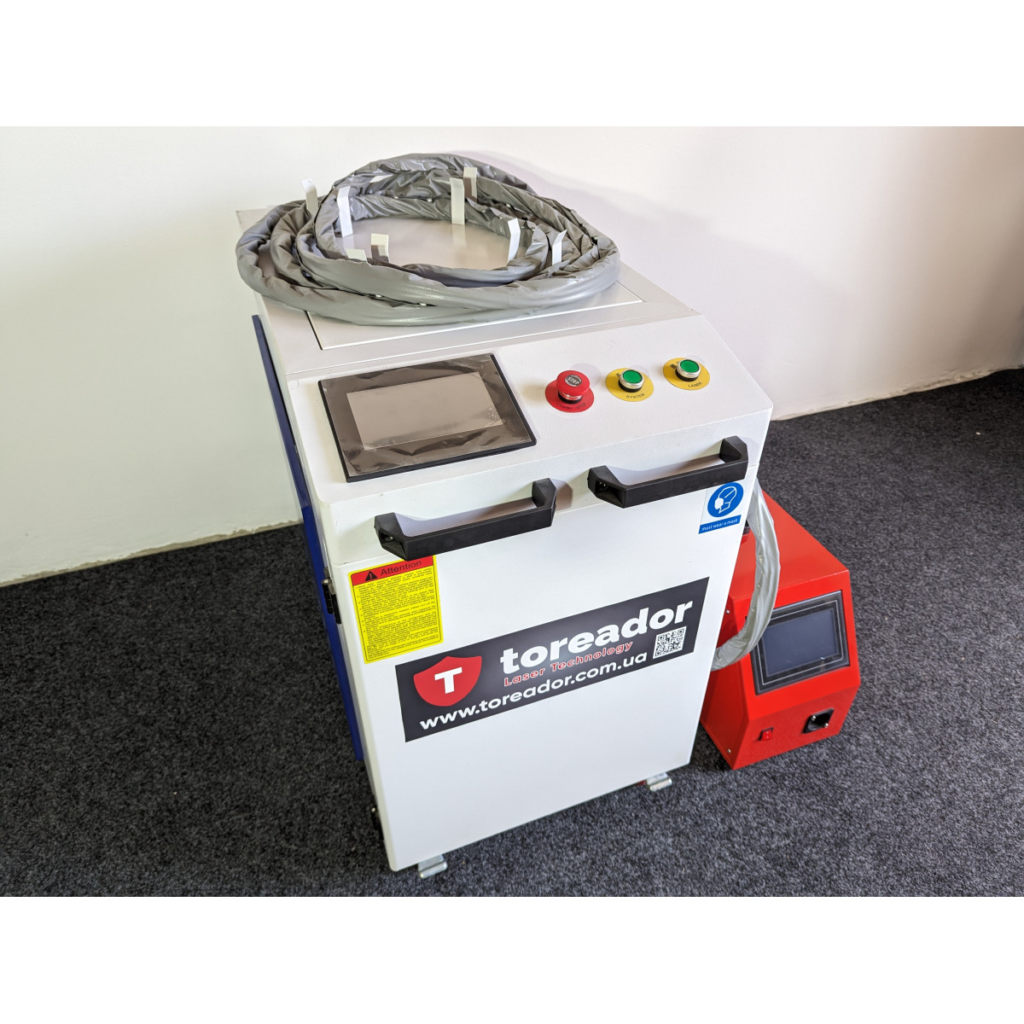
Best for: First-time laser welders, budget-conscious makers, and anyone who wants to discover if laser welding belongs in their workshop without a five-figure investment.
Raycus is China’s largest fiber laser source manufacturer, and their 1000W Handheld system is the most affordable way to enter the ecosystem with genuine fiber laser technology.
Specs & Key Details
| Feature | Specification |
|---|---|
| Laser Source | Raycus fiber laser, 1070 nm wavelength |
| Power | 1000W continuous wave |
| Welding Modes | Continuous, pulse |
| Wire Feed | Optional external wire feeder |
| Materials | Stainless steel, carbon steel, aluminum (with skill) |
| Penetration Depth | Up to 2.5 mm on stainless steel |
| Chiller | External chiller unit (included) |
| Weight (gun) | 2.8 lbs |
| Power Requirements | 220V single-phase, 25A breaker |
| Warranty | 1-year limited |
What Makes It Special
The 1000W power level is the sweet spot for home use. It handles 90% of hobbyist and small repair projects—sheet metal, tubing, brackets, small enclosures—without the electrical demands of 1500W systems.
The Raycus source, while not IPG-grade, delivers consistent beam quality with 50,000+ hour rated life.
This is the lowest-risk entry point that still delivers genuine results.
Pros
- Lowest entry price for genuine fiber laser welding
- 1000W handles most home fabrication needs
- 220V 25A requirement is achievable in most home garages
- Raycus source is proven in thousands of industrial installations
- Optional wire feed adds capability as skills grow
Cons
- No wobble mode—gap bridging requires more skill
- Heavier gun at 2.8 lbs—shorter comfortable sessions
- Limited aluminum capability at 1000W—reflectivity challenges
- 1-year warranty is shorter than premium competitors
- Slower penetration means more passes on thicker material
Should You Buy It?
Yes—if you’re testing whether laser welding fits your workflow and want minimal financial risk.
This is for the hobbyist who’s mastered MIG and TIG and wants to add laser precision, the homeowner repairing aluminum boats or stainless furniture, or the maker curious about fiber laser technology.
Use it for six months; if you’re welding weekly and hitting power limits, upgrade to 1500W. If not, you’ve gained capability without bankruptcy. It’s not built for production, but it’s absolutely built for real learning and real results.
4. JPT 1500W MOPA Laser Welder — The Precision Specialist
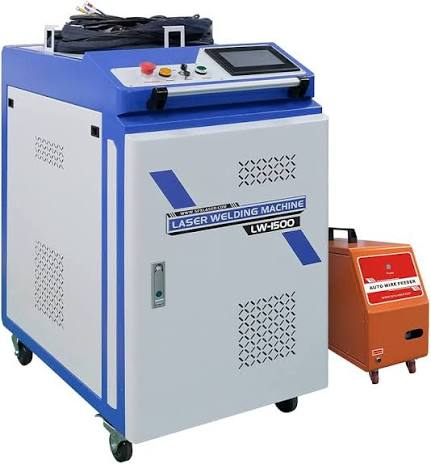
Best for: Jewelry makers, medical device prototypers, multi-material experimenters, and anyone who needs pulse control that standard fiber lasers can’t deliver.
JPT’s MOPA (Master Oscillator Power Amplifier) technology separates this from every other on this list. It is not just a welder—it is a precision instrument.
Specs & Key Details
| Feature | Specification |
|---|---|
| Laser Source | JPT MOPA fiber laser, adjustable pulse width |
| Power | 1500W peak, adjustable 20W–1500W |
| Pulse Width | 1–350 ns adjustable |
| Pulse Frequency | 1–4000 kHz |
| Welding Modes | Continuous, quasi-continuous, nanosecond pulse |
| Wire Feed | Optional precision wire feeder |
| Materials | All metals including highly reflective copper and gold |
| Penetration Depth | Up to 3 mm on stainless, 1.5 mm on copper |
| Chiller | Integrated compact chiller |
| Weight (gun) | 2.2 lbs |
| Power Requirements | 220V single-phase, 30A breaker |
| Warranty | 2-year limited (laser source) |
What Makes It Special
The adjustable pulse width transforms what you can weld. Nanosecond pulses vaporize less material, create smaller heat-affected zones, and can join dissimilar metals that continuous-wave lasers struggle with. The quasi-continuous mode bridges the gap between spot welding and seam welding. For this precision is unheard of—this is the machine that medical device prototypes and high-end jewelry repairs demand.
Pros
- MOPA pulse control enables welding impossible with standard fiber lasers
- Copper and gold welding capability—highly reflective metals
- Minimal heat-affected zone preserves material properties
- Adjustable power from 20W precision to 1500W penetration
- Compact integrated chiller saves garage floor space
Cons
- Premium price for MOPA technology
- Complex parameter optimization—pulse width, frequency, power all interact
- Slower on thick steel than pure continuous-wave 1500W
- Overkill for standard stainless or carbon steel welding
- Learning curve is steeper than standard fiber lasers
Should You Buy It?
Yes—if you work with copper, gold, dissimilar metals, or need heat-affected zones measured in microns, not millimeters.
This is for the jewelry maker welding gold settings, the medical prototyper joining titanium to stainless, or the researcher pushing material science boundaries.
It is not the fastest steel welder, and it is not the cheapest entry point. But for precision that TIG simply cannot match, MOPA is the only answer.
5. Baison Laser 1000W Handheld — The Space-Saving Workhorse
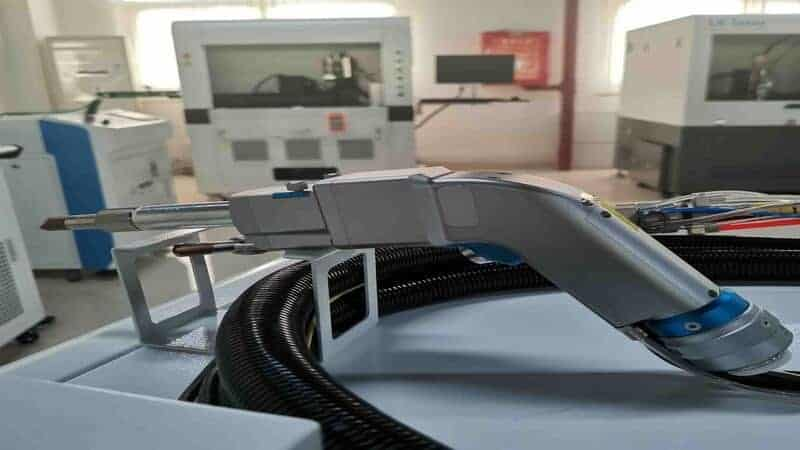
Best for: Garage workshops with limited floor space, mobile repair services, and anyone who needs that doesn’t demand half the garage.
The Baison 1000W solves the chiller problem that stops many people from buying a laser welder: where do you put a refrigerator-sized cooling unit?
Specs & Key Details
| Feature | Specification |
|---|---|
| Laser Source | Raycus fiber laser, 1070 nm |
| Power | 1000W continuous wave |
| Welding Modes | Continuous, pulse |
| Wire Feed | Optional external wire feeder |
| Materials | Stainless steel, carbon steel, aluminum |
| Penetration Depth | Up to 2.5 mm on stainless steel |
| Chiller | Compact integrated chiller (20″ × 14″ × 16″) |
| Weight (gun) | 2.6 lbs |
| Power Requirements | 220V single-phase, 25A breaker |
| Warranty | 1-year limited |
What Makes It Special
The compact chiller is the standout. At roughly the size of a mini-fridge rather than a full refrigerator, this system fits in corners that standard laser welders cannot.
The integrated design means fewer hoses, fewer connections, and fewer leak points.
in a two-car garage that still needs to park two cars, this space efficiency is genuinely valuable.
Pros
- Compact chiller is the smallest in the 1000W class
- Integrated design reduces hose complexity and leak risk
- 1000W power handles most home fabrication needs
- Lightweight gun at 2.6 lbs for comfortable extended use
- Affordable price with genuine Raycus source
Cons
- No wobble mode—gap bridging requires skill
- 1000W limit on thicker materials
- 1-year warranty is standard, not exceptional
- Less brand recognition than IPG or Han’s
- Customer support can be slower than premium brands
Should You Buy It?
Yes—if your garage is already full of tools and you need laser capability without sacrificing parking space.
This is for the homeowner with a packed workshop, the mobile repair technician who brings the laser to the job, or the maker who values floor space as much as capability.
The compact chiller alone justifies consideration if you’ve measured your garage and standard chillers simply won’t fit.
6. MAX 1500W Fiber Laser Welder — The Production Pretender
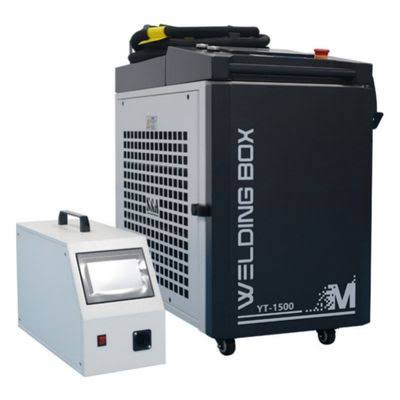
Best for: High-volume home producers, small-batch manufacturers, and anyone who wants 1500W speed with features that mimic industrial automation.
The MAX 1500W packs features typically found in $20,000+ systems into a package that fits home budgets and home spaces.
Specs & Key Details
| Feature | Specification |
|---|---|
| Laser Source | MAX fiber laser (Chinese OEM), 1070 nm |
| Power | 1500W continuous wave |
| Welding Modes | Continuous, pulse, wobble, spot |
| Wire Feed | Dual wire feeder with automatic wire cutting |
| Materials | Stainless steel, carbon steel, aluminum, brass |
| Penetration Depth | Up to 4 mm on stainless steel |
| Chiller | External industrial chiller |
| Weight (gun) | 2.5 lbs |
| Power Requirements | 220V single-phase, 32A breaker |
| Warranty | 2-year limited (laser source) |
What Makes It Special
The dual wire feeder is the standout feature. Load two different wire types (e.g., 0.8 mm stainless and 1.2 mm aluminum) and switch between them via touchscreen—no manual spool changes mid-project.
The automatic wire cutting trims filler to precise lengths, reducing waste and improving consistency.
This automation is genuinely rare and genuinely useful for anyone doing varied work.
Pros
- Dual wire feeder eliminates mid-project spool changes
- Automatic wire cutting improves consistency and reduces waste
- 1500W power at competitive price point
- Wobble mode included for gap bridging
- 2-year laser source warranty shows confidence
Cons
- OEM laser source lacks IPG or Raycus brand recognition
- External chiller demands floor space
- Complex setup for dual wire system
- Documentation is often translated and sparse
- Resale value uncertain due to lesser-known brand
Should You Buy It?
Yes—if you weld varied materials regularly and hate changing wire spools.
This is for the small-batch manufacturer producing stainless and aluminum products, the restorer switching between steel bodywork and brass trim, or the maker who values workflow efficiency over brand prestige.
The dual wire system saves real time on multi-material days. Just know you’re buying features over proven pedigree.
7. Cloudray 1000W Desktop Laser Welder — The Benchtop Jewel
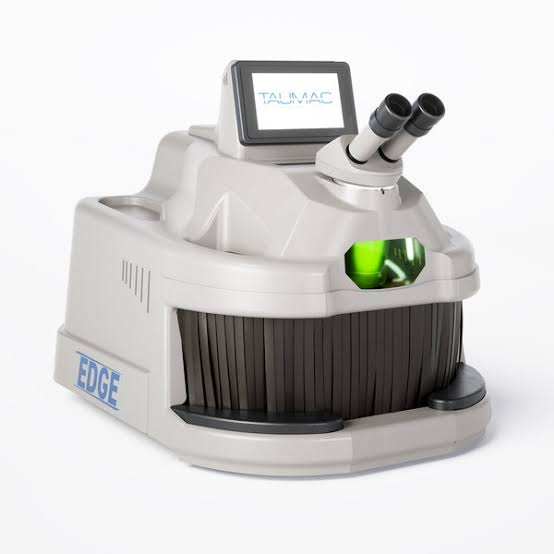
Best for: Jewelry makers, watch repairers, electronics prototypers, and anyone who needs a that fits on a workbench, not a garage floor.
The Cloudray 1000W Desktop is the only true benchtop on this list. It doesn’t handheld. It doesn’t wobble. It precisely spot-welds small joints with microscope-guided accuracy.
Specs & Key Details
| Feature | Specification |
|---|---|
| Laser Source | JPT fiber laser, 1070 nm |
| Power | 1000W peak, adjustable 10W–1000W |
| Welding Type | Spot and seam (fixed gun, moving workpiece) |
| Spot Diameter | 0.2–2.0 mm adjustable |
| Materials | Gold, silver, platinum, stainless, titanium, copper |
| Microscope | 10× stereo microscope with crosshair guidance |
| Work Area | 100 mm × 100 mm × 80 mm (XYZ stage) |
| Chiller | Compact integrated chiller |
| Power Requirements | 110V or 220V, 15A breaker |
| Weight | 85 lbs (benchtop unit) |
| Warranty | 1-year limited |
What Makes It Special
The 10× stereo microscope with illuminated crosshairs lets you weld joints invisible to the naked eye. The XYZ positioning stage moves the workpiece, not the laser—meaning sub-millimeter accuracy impossible with handheld systems. The 110V compatibility means no electrical panel upgrades for most US homes.
Pros
- Microscope-guided welding for joints under 1 mm
- 110V compatibility—works in standard home outlets
- Adjustable spot size from 0.2 mm precision to 2.0 mm penetration
- Precious metal optimized—gold, silver, platinum settings pre-configured
- Benchtop footprint fits in workshops, not just garages
Cons
- Not handheld—workpiece must fit in 100×100 mm stage
- 85 lbs is not portable
- 1000W peak is lower than continuous-wave handhelds
- Limited to small work—no car panels, no large frames
- Premium price for specialized capability
Should You Buy It?
Yes—if your work is small, precious, and demands precision that handheld systems cannot deliver. This laser welder for home use is for the jeweler repairing prong settings, the watchmaker welding titanium cases, or the electronics prototyper joining micro-components. It is not a general fabrication tool—it is a precision instrument. And in that singular purpose, it delivers results that no handheld system, at any power, can match.
Buying Guide: How to Choose the Right Laser Welder for Home Use
Buying a laser welder for home use isn’t about picking the most powerful option. It is about matching the machine to your materials, projects, electrical capacity, skill level, and budget.
1. Power Level: The Foundation of Capability
| Power | Penetration (Stainless) | Best For | Electrical Needs |
|---|---|---|---|
| 500–800W | 1–1.5 mm | Jewelry, thin sheet, spot repairs | 110V 15A possible |
| 1000W | 2–2.5 mm | General home fabrication, automotive, furniture | 220V 25A standard |
| 1500W | 3–4 mm | Thick material, production speed, gap bridging | 220V 30–32A required |
| 2000W+ | 5+ mm | Industrial, heavy fabrication, not truly “home” | 220V 40A+, three-phase ideal |
The reality: 1000W handles 90% of home fabrication. Only upgrade to 1500W if you regularly weld 3+ mm material or need production speed.
2. Laser Source: The Heart of the Machine
| Source | Reputation | Best For | Price Premium |
|---|---|---|---|
| IPG Photonics | Gold standard, 100,000+ hour life, USA/Germany | Professionals, businesses, no-compromise buyers | Highest |
| JPT (MOPA) | Excellent pulse control, strong in precision | Jewelry, medical, copper/gold, multi-material | High |
| Raycus | Proven reliability, 50,000+ hour life, China | General fabrication, budget-conscious, proven track record | Moderate |
| MAX/OEM | Variable quality, newer to market | Budget buyers, feature-focused, shorter proven history | Lowest |
Critical insight: The laser source determines 70% of your machine’s value and 90% of its longevity. A cheap source in an expensive chassis is still a cheap machine.
3. Welding Modes: What You Can Actually Do
| Mode | How It Works | Best For | Limitations |
|---|---|---|---|
| Continuous Wave (CW) | Steady beam, maximum penetration | Thick material, speed, deep joints | More heat input, less precision |
| Pulse | Short bursts, controlled energy | Thin material, heat-sensitive work, spot welding | Slower, shallower penetration |
| Wobble/Oscillation | Beam moves in pattern (circle, figure-8) | Gap bridging, wider beads, reduced porosity | Slower than straight line, requires tuning |
| Quasi-Continuous | Rapid pulses mimicking CW | Bridging pulse and continuous advantages | Complex parameter optimization |
Our recommendation: For general home use, continuous + pulse covers most needs. Wobble is worth the premium if you weld aluminum or have imperfect joint fit-up.
4. Wire Feed: To Fill or Not to Fill
| System | Best For | Pros | Cons |
|---|---|---|---|
| No wire feed | Butt joints, perfect fit-up, thin material | Simpler, cleaner, less setup | Limited gap tolerance |
| Manual wire | Occasional filler needs, tight spaces | Flexible, no machine dependency | Inconsistent, requires skill |
| Automatic wire feed | Production, gap bridging, thick material | Consistent, faster, less skill required | More complex, more maintenance |
| Dual wire feed | Multi-material shops, varied work | No spool changes, workflow efficiency | Premium price, complexity |
5. Materials You Actually Weld
| Material | Laser Welding Consideration | Recommended Power |
|---|---|---|
| Stainless steel | Excellent laser absorption, easiest to weld | 1000W+ for general, 500W+ for thin |
| Carbon steel | Good absorption, watch for carbon migration | 1000W+ |
| Aluminum | Highly reflective, requires wobble or high power | 1500W recommended, 1000W possible with skill |
| Copper | Extremely reflective, needs MOPA or very high power | 1500W+ or MOPA pulse |
| Titanium | Excellent but oxygen-sensitive, needs shielding | 1000W+ with argon coverage |
| Gold/Silver | Low melting point, needs precision control | 500–1000W with pulse/MOPA |
Pro tip: Aluminum and copper are the “gotchas” of laser welding. If these are your primary materials, don’t buy less than 1500W or MOPA.
6. Electrical Requirements: Can Your Home Handle It?
| Requirement | Typical Home Capability | Solution If Inadequate |
|---|---|---|
| 110V 15A | Standard US outlet | No action needed—plug and weld |
| 220V 25A | Dryer outlet, some garages | May need dedicated circuit installation ($300–$800) |
| 220V 30A | Electric range, some garages | Likely needs electrician ($500–$1,200) |
| 220V 40A+ | Rare in homes without upgrade | Requires panel upgrade ($1,500–$3,000+) |
Our recommendation: Before buying any laser welder for home use, verify your electrical capacity. The cost of installation can exceed the machine’s price.
7. Chiller Requirements: The Hidden Space Hog
| Chiller Type | Size | Best For | Noise Level |
|---|---|---|---|
| Integrated compact | ~2 cubic feet | Space-constrained workshops | Moderate |
| External compact | ~3–4 cubic feet | General home use | Moderate |
| External industrial | ~6–8 cubic feet | 1500W+ continuous use, hot climates | Higher |
The truth: The chiller is often larger than the laser unit itself. Measure your space before buying.
8. Safety: Non-Negotiable for Home Use
Every laser welder for home use requires:
| Safety Element | Why It Matters | Cost If Missing |
|---|---|---|
| Laser safety glasses (1070 nm rated) | Fiber laser light is invisible and permanently blinding | Your eyesight |
| Enclosed welding area or curtains | Reflections can burn skin and ignite materials | Fires, burns, liability |
| Fume extraction | Metal vaporization creates toxic particulates | Respiratory damage |
| Fire extinguisher (Class D) | Metal fires require specialized suppression | Your workshop, potentially your home |
| Interlocked door/panel | Prevents accidental exposure when cabinet open | Regulatory fines, injury |
Red flags: Never operate a fiber laser without proper eye protection. The beam is invisible at 1070 nm—you won’t blink, you won’t look away, you’ll just lose vision permanently.
9. Budget Reality
| Tier | Price Range | What You Get |
|---|---|---|
| Entry | $2,000–$4,000 | 1000W, basic source, manual operation, limited features |
| Mid-Range | $4,000–$8,000 | 1000–1500W, Raycus/JPT source, wire feed, wobble mode |
| Premium | $8,000–$15,000 | 1500W, IPG source, integrated features, industrial support |
| Professional/Medical | $15,000+ | MOPA, microscope guidance, precision control, certification |
The sweet spot for serious home use: $4,000–$8,000 gets you a laser welder for home use with genuine capability, proven source, and features you’ll actually use.
Frequently Asked Questions
Are laser welders good for home use?
Yes—with serious caveats. A laser welder for home use delivers capabilities impossible with traditional welding:
- Aluminum welding without AC TIG mastery
- 0.2 mm spot welds impossible with any torch
- Minimal heat-affected zones preserving material properties
- No filler wire needed for many joints
- Speed that makes production viable from a garage
However, they demand:
- 220V electrical upgrades in most homes
- Laser safety protocols that cannot be shortcut
- Fume extraction that protects your lungs
- Initial investment that exceeds traditional welders by 10×
How much does a laser welder for home use cost?
| Category | Price Range | Examples |
|---|---|---|
| Entry-level 1000W | $2,000–$4,000 | Raycus 1000W, basic configuration |
| Mid-range 1000–1500W | $4,000–$8,000 | Han’s HW-1500, Baison 1000W, MAX 1500W |
| Premium 1500W | $8,000–$15,000 | IPG LightWeld 1500, JPT MOPA systems |
| Precision benchtop | $5,000–$12,000 | Cloudray desktop, jewelry-specific systems |
Hidden costs: Electrical installation ($500–$3,000), fume extraction ($300–$2,000), safety equipment ($200–$500), chiller placement space.
What can I weld with a 1000W laser welder?
| Material | Thickness | Joint Type |
|---|---|---|
| Stainless steel | Up to 2.5 mm | Butt, lap, fillet, corner |
| Carbon steel | Up to 2.5 mm | Butt, lap, fillet |
| Aluminum | Up to 1.5 mm (skilled) | Butt, lap (challenging) |
| Brass | Up to 1.5 mm | Lap, fillet |
| Copper | Not recommended at 1000W | Requires 1500W+ or MOPA |
What can I weld with a 1500W laser welder?
| Material | Thickness | Notes |
|---|---|---|
| Stainless steel | Up to 4 mm | Comfortable, production-capable |
| Carbon steel | Up to 4 mm | Standard fabrication range |
| Aluminum | Up to 3 mm | Wobble mode recommended |
| Brass/Copper | Up to 2 mm | Still challenging, MOPA better |
| Titanium | Up to 3 mm | Requires argon shielding |
Is laser welding easier than TIG or MIG?
Different, not necessarily easier. Laser welding advantages:
- No filler wire needed for many joints (simpler setup)
- No contact with workpiece (no tungsten contamination)
- One-handed operation possible (other hand holds parts)
- Minimal cleanup (no slag, minimal spatter)
Laser welding challenges:
- Tighter joint fit-up required (gaps over 0.5 mm need filler)
- Reflective metals (aluminum, copper) demand skill or power
- Safety requirements are stricter than arc welding
- Initial cost is 5–10× higher than TIG/MIG
Our take: If you already weld, laser adds capability. If you’re starting from zero, laser’s learning curve is gentler for basic joints but steeper for advanced materials.
Do I need a welding certificate to use a laser welder at home?
No for home use, yes for commercial work in most jurisdictions. Home hobbyist use of a laser welder for home use typically requires no certification. However:
- Insurance may require safety training documentation
- Commercial fabrication often requires AWS or equivalent certification
- Medical device welding requires FDA-compliant processes and training
- Some states require contractor licensing for paid welding work
Always: Check local regulations and your homeowner’s insurance policy before operating.
How do I maintain a laser welder?
| Task | Frequency | Why |
|---|---|---|
| Clean protective lens | Daily or per use | Contamination absorbs laser energy, damages lens |
| Check coolant level | Weekly | Low coolant causes source overheating and failure |
| Inspect fiber optic cable | Monthly | Kinks or damage cause power loss and fire risk |
| Calibrate beam alignment | Quarterly | Misalignment reduces penetration and quality |
| Replace protective lens | Every 50–100 hours or when damaged | Cheap insurance against $5,000+ source damage |
| Professional service | Annually | Source power verification, chiller maintenance |
Can I weld aluminum with a laser welder?
Yes, but it’s the hardest common material. Aluminum challenges for laser welder for home use:
- High reflectivity at 1070 nm—beam bounces off rather than absorbs
- High thermal conductivity—heat dissipates faster than steel
- Oxide layer—aluminum oxide melts at 3× the base metal temperature
- Porosity tendency—hydrogen absorption creates voids
Solutions:
- 1500W minimum power to overcome reflectivity
- Wobble welding to break up oxide and improve absorption
- Argon shielding to prevent oxidation during welding
- Clean, oxide-free surfaces—mechanical or chemical cleaning before welding
What’s the difference between fiber laser and CO2 laser welding?
| Feature | Fiber Laser (1070 nm) | CO2 Laser (10,600 nm) |
|---|---|---|
| Wavelength | Near-infrared | Far-infrared |
| Metal absorption | Excellent | Good (reflective on some metals) |
| Fiber delivery | Yes—flexible, long reach | No—rigid mirror systems |
| Handheld capable | Yes | No—requires fixed optics |
| Home use viability | Excellent | Poor—industrial only |
| Maintenance | Low | High (mirror alignment, gas refill) |
For home use: Fiber laser is the only practical choice. CO2 systems are industrial machines, not garage tools.
How long does a fiber laser source last?
| Source Quality | Rated Life | Real-World Expectation |
|---|---|---|
| IPG | 100,000+ hours | 15–20 years of home use |
| JPT/Raycus | 50,000–80,000 hours | 10–15 years of home use |
| OEM/Unknown | 20,000–50,000 hours | 5–10 years, variable quality |
Reality check: 100,000 hours is 11 years of continuous operation. For a laser welder for home use used 10 hours weekly, even a 50,000-hour source lasts 96 years. Degradation (power loss, beam quality decline) matters more than outright failure.
Final Thoughts: Your Perfect Laser Welder for Home Use Awaits
- Buy the IPG LightWeld 1500 if you’re running a business from your garage and demand industrial pedigree.
- Buy the Han’s Laser HW-1500 if you need 1500W capability and professional results without the IPG premium.
- Buy the Raycus 1000W if you’re testing whether laser welding fits your workflow with minimal financial risk.
- Buy the JPT MOPA if you work with copper, gold, or need pulse precision impossible with standard fiber.
- Buy the Cloudray Desktop if your work is small, precious, and demands microscope-guided accuracy.
Your garage is waiting. Run the 220V line. Set up the chiller. Don the safety glasses. Strike the beam.