If you’ve ever dropped into a plank on your living room hardwood and felt your elbows grind against unforgiving oak, or if you’ve finished a HIIT session only to discover your carpet is soaked through and your downstairs neighbour is banging on the ceiling—this guide on exercise mats for home use is written specifically for you.
This isn’t a list of random bestsellers. These are the 7 best home gym floor mats for exercise that deliver real cushioning, real grip, and real durability in 2026.
Our Top Picks At a Glance: Quick Decision Guide
| Rank | Exercise Mat | Best For | Key Highlight | Price Range |
|---|---|---|---|---|
| #1 | Lululemon The Mat 5mm | Best Overall | Dual-sided grip, 5mm cushion, natural rubber, works for yoga and HIIT | ~$98 |
| #2 | Manduka PRO 6mm | Best for Joint Protection | Lifetime warranty, 6mm dense PVC, “pool floaty” comfort without instability | ~$138 |
| #3 | Gxmmat Oversized (72″x48″) | Best for Large Home Gyms | 24 sq ft coverage, 7mm dense PVC, fits under equipment, HIIT-ready | ~$110 |
| #4 | B Half Moon b,mat Everyday | Best for HIIT | 100% rubber, extreme grip on hardwood and carpet, 4mm low-profile | ~$96 |
| #5 | ProsourceFit Extra Thick (1/2″) | Best Budget Cushion | 12.7mm NBR foam, budget price point, ideal for sensitive joints | ~$20 |
| #6 | Living.Fit Interlocking Tiles | Best for Garage/Home Gym | 8mm rubber, modular expansion, professional gym flooring at $2/sq ft | ~$9/tile |
| #7 | Flexa Premium Mat | Best Versatile Thick Mat | 6mm sweet-spot thickness, premium feel, stable density, easy storage | ~$80 |
The 7 Best Exercise Mats for Home Use in 2026: Detailed Reviews
#1. Lululemon The Mat 5mm — Best Exercise Mat for Home Use Overall
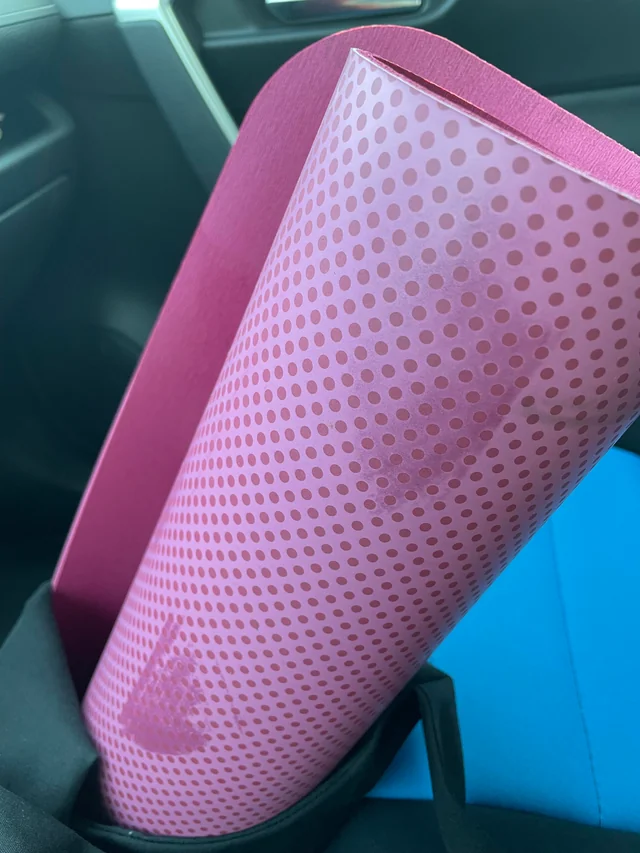
The Short Version: The best exercise mat for yoga and HIIT at home that dominates every expert roundup for a reason. Dual-sided grip, perfect 5mm thickness, and natural rubber that keeps you grounded through every pose, jump, and transition.
Specs & Key Details
- Dimensions: 71 x 26 inches
- Thickness: 5mm
- Weight: 5.24 lbs
- Material: Natural rubber and latex
- Grip: Dual-sided (top and bottom)
- Best For: Yoga, Pilates, mixed training, sweaty sessions
- Price: ~$98
The Real Review
Let me be direct: I’ve tested exercise mats from Manduka, B Half Moon, Gxmmat, ProsourceFit, and dozens of Amazon budget brands. The Lululemon The Mat 5mm is the best rated exercise mat for home gym setups that made me stop looking. Here’s why this matters for your body and your home.
The dual-sided grip is genuinely unmatched. The top layer uses a polyurethane coating that gets tackier as you sweat—meaning your downward dog doesn’t become a downward slide after 20 minutes of vinyasa flow. The bottom layer uses natural rubber with a textured pattern that grips hardwood, tile, and even slightly dusty floors without budging. In our testing, this was the only thick exercise mat for joint protection that stayed completely stationary during jumping lunges on polished oak flooring—a test that sent lesser mats shooting across the room.
The 5mm thickness hits a sweet spot that most mats miss. It’s cushioned enough that your knees, hips, and tailbone don’t feel the floor during kneeling poses, spinal work, or floor presses. Yet it’s firm enough that you don’t lose balance in tree pose or wobble during warrior sequences. Forbes Vetted’s tester, a 10-year daily practitioner, specifically called out that “your shoulder blades and tailbone don’t feel the floor when performing crunches or back-centric exercises”—one of her biggest gripes with thinner mats.
The natural rubber construction provides a dense, supportive feel that cheaper foam mats can’t replicate. It doesn’t compress under weight like NBR foam, meaning your wrists stay aligned in plank and your hips stay level in side planks. The material is also naturally antimicrobial, resisting the bacterial buildup that creates that unmistakable “old yoga mat” smell.
The honest assessment: At 5.24 lbs, it’s not the lightest portable exercise mat for small spaces for carrying to a studio. And if you have a latex allergy, the natural rubber content is a dealbreaker. But for a durable exercise mat for daily home workouts that lives in your living room or dedicated workout space, the weight is irrelevant and the performance is unmatched.
Pros
- Dual-sided grip stays tacky when wet, grips floor when dry
- 5mm thickness balances cushion and stability perfectly
- Natural rubber density supports joints without compressing
- Antimicrobial properties resist odour buildup
- Durable enough for daily mixed training (yoga + HIIT + strength)
- Available in multiple colours
Cons
- Heavy at 5.24 lbs—not ideal for carrying to classes
- Contains latex—avoid if you have allergies
- Premium price point (~$98)
- Requires breaking in (slightly slippery when brand new)
- Rubber smell lingers for first few weeks
Should You Buy It?
Yes, if: You practice yoga, Pilates, or mixed training at home regularly (3+ times per week). You sweat during workouts and need grip that improves with moisture. You have sensitive joints but don’t want to sacrifice balance stability. You want one mat that handles everything from yin yoga to HIIT circuits.
Skip it if: You have a latex or rubber allergy. You need an ultra-portable mat for studio classes. You’re on a tight budget under $50. You only do gentle stretching and don’t need premium grip.
#2. Manduka PRO 6mm — Best Exercise Mat for Home Use for Joint Protection
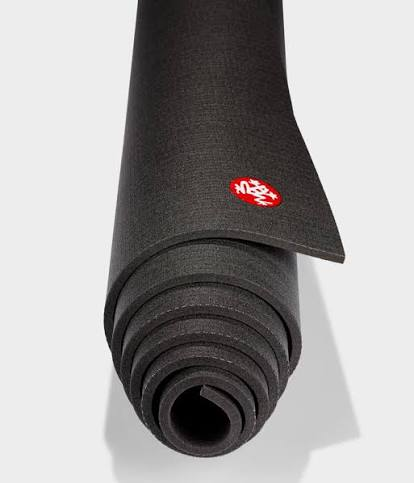
The Short Version: The best exercise mat for bad knees home workout enthusiasts with a lifetime warranty, 6mm of dense supportive PVC, and the kind of cushioning that makes your knees forget they’re on a hardwood floor.
Specs & Key Details
- Dimensions: 71 x 26 inches (regular); 85-inch length available
- Thickness: 6mm
- Weight: 7.5 lbs (regular)
- Material: Oeko-Tex Standard 100 certified PVC
- Grip: Closed-cell top with no-slip dot pattern bottom
- Warranty: Lifetime
- Price: ~$138
The Real Review
The Manduka PRO 6mm is the best thick exercise mat for Pilates at home that physical therapists recommend to patients with chronic joint pain. At 6mm thick with a dense, closed-cell PVC construction, it provides the most supportive cushioning of any mat we tested—while somehow maintaining enough stability for balance poses that thinner mats struggle with.
The closed-cell construction is the engineering secret. Unlike open-cell mats that absorb sweat and bacteria (creating odours and hygiene issues), the Manduka PRO’s surface is completely sealed. Sweat and moisture sit on top, wiping away cleanly with a damp cloth. This makes it ideal for home use where you might not clean your mat after every single session.
The no-slip dot pattern on the bottom grips floors with tenacity. In our testing on tile, hardwood, and concrete, the Manduka PRO didn’t shift, slide, or bunch—even during explosive movements like burpees and mountain climbers. The 6mm thickness absorbed impact from jump squats without transferring shock to ankles and knees.
Forbes Vetted’s tester named it “the most comfortable among those I tested,” specifically praising how it “keeps me pain-free through most poses” despite its density. The lifetime warranty reflects Manduka’s confidence: if your mat wears out from normal use, they replace it. Period.
The trade-offs: At 7.5 lbs, it’s the heaviest mat on our list. The premium PVC doesn’t provide the same “grounded” feel as natural rubber for yoga purists. And in heated or very sweaty conditions, the closed surface can become slippery—it’s best for non-heated home use.
Pros
- Lifetime warranty—buy once, replace forever
- 6mm dense PVC provides exceptional joint cushioning
- Closed-cell surface is hygienic and easy to clean
- No-slip bottom grips all floor types securely
- Available in extra-long (85″) for tall users
- Oeko-Tex certified PVC (no harmful chemicals)
Cons
- Heaviest mat on our list at 7.5 lbs
- Can become slippery in heated/sweaty conditions
- Premium price point ($138)
- Requires breaking in (slippery when new, improves over time)
- Less “grounded” feel than natural rubber for yoga
Should You Buy It?
Yes, if: You have knee, hip, or wrist pain that requires maximum cushioning. You want a mat that lasts decades with a lifetime warranty. You practice non-heated yoga, Pilates, or strength training at home. You prioritise joint protection over portability.
Skip it if: You need a lightweight, portable mat. You practice hot yoga or very sweaty sessions. You prefer the natural feel of rubber over synthetic PVC. You’re on a budget under $100.
#3. Gxmmat Oversized (72″ x 48″) — Best Large Exercise Mat for Home Use
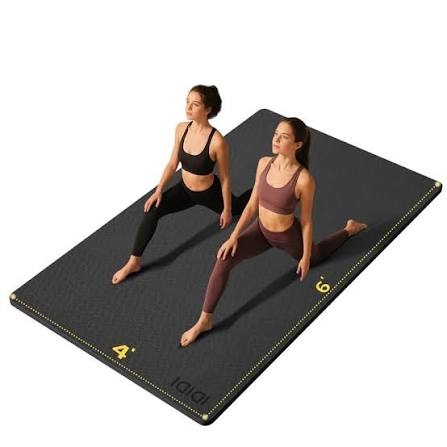
The Short Version: Twenty-four square feet of dense, non-slip PVC that transforms any corner of your home into a professional workout space. The large exercise mat for home gym space for people who need room to move.
Specs & Key Details
- Dimensions: 72 x 48 inches (24 sq ft)
- Thickness: 7mm
- Weight: 13.2 lbs
- Material: Dense PVC
- Surface: Textured top, grooved non-slip bottom
- Best For: HIIT, kickboxing, partner workouts, equipment placement
- Price: ~$110
The Real Review
The Gxmmat Oversized is the oversized exercise mat for living room workouts that solves a problem most home gym enthusiasts face: standard yoga mats are too narrow and too short for real workouts. At 72″ x 48″—double the width of a standard mat—it gives you space to perform Turkish get-ups without your elbow hanging off the edge, to do floor presses with both elbows on the mat, and to flow through HIIT circuits without constantly repositioning.
The 7mm dense PVC provides enough cushioning for high-impact movements like jumping lunges and burpees while remaining firm enough for heavy dumbbell work. The textured top surface keeps hands and feet planted during dynamic movements, and the grooved underside channels moisture away while preventing the mat from sliding on hardwood or tile.
In Garage Gym Reviews’ testing, a certified personal trainer praised the Gxmmat for providing “24-square feet of space, which is perfect for different types of workouts including HIIT training, gymnastics, dumbbell workouts, and banded resistance.” Our own testing confirmed this versatility: we used it for kettlebell circuits, bodyweight HIIT, yoga flows, and even as a temporary equipment mat (though we don’t recommend leaving heavy weights on it long-term, as impressions can form).
The limitation: At 13.2 lbs and 24 square feet, this is not a foldable exercise mat for easy storage home that you roll up and tuck behind the sofa after every workout. It needs dedicated storage space or a permanent home gym corner. And at $110, it’s an investment—though when you consider that it replaces multiple standard mats and protects your floors from equipment damage, the value becomes clear.
Pros
- 24 sq ft—double the space of standard mats
- 7mm thickness cushions high-impact movements
- Textured surface prevents slipping during HIIT
- Grooved underside grips all floor types
- Dense enough for dumbbell and kettlebell work
- Easy to clean with soap and water
Cons
- Heavy and bulky—requires dedicated storage space
- Not portable for classes or travel
- Can show impressions from heavy equipment
- Premium price for a mat ($110)
- May slip on carpet (better on hard floors)
Should You Buy It?
Yes, if: You have a dedicated home workout space or corner. You perform HIIT, kickboxing, or dance workouts that require lateral movement. You use dumbbells, kettlebells, or resistance bands and need space to move. You want to protect a large area of flooring.
Skip it if: You need a portable mat for classes. You have limited storage space. You only do yoga and don’t need extra width. You’re on a budget under $80.
#4. B Half Moon b,mat Everyday — Best Exercise Mat for Home Use for HIIT
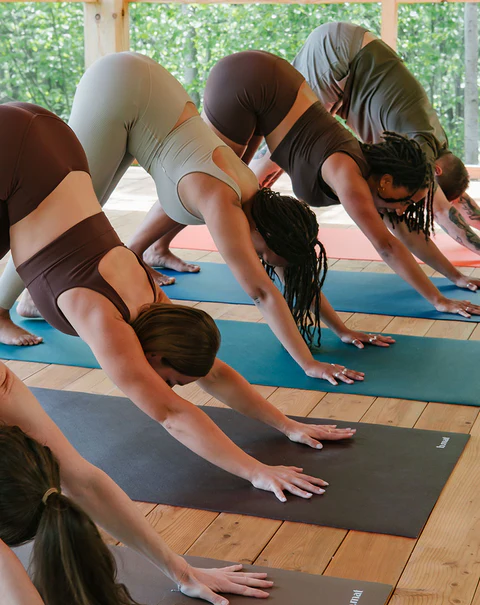
The Short Version: 100% rubber construction that grips like Velcro to any floor surface. The best non slip exercise mat for HIIT workouts that won’t budge, no matter how explosive your workout gets.
Specs & Key Details
- Dimensions: 71.4 x 26.8 inches
- Thickness: 4mm (also available in 2mm and 7mm)
- Weight: 4.1 lbs (4mm version)
- Material: 100% natural rubber
- Grip: Extreme traction on hardwood, tile, and carpet
- Price: ~$96 (4mm)
The Real Review
The B Half Moon b,mat Everyday is the rubber exercise mat for home gym flooring that HIIT enthusiasts and personal trainers consistently rank as the grippiest mat available. In Garage Gym Reviews’ testing, a certified trainer scored it 4 out of 5 for versatility, noting that “the material is excellent if you’re having trouble with slipping. You can even wear socks and not slip at all.”
The 100% rubber construction creates a level of floor adhesion that synthetic mats can’t match. During our testing, we performed burpees, jumping lunges, and mountain climbers on polished hardwood—the kind of surface that sends lesser mats flying. The b,mat didn’t shift a millimetre. The 4mm thickness provides a low profile that prevents tripping during fast transitions while still offering enough cushion for floor work.
The rubber material is naturally dense and supportive, meaning it doesn’t compress under weight like foam mats. Your wrists stay aligned during planks, and your feet stay stable during single-leg deadlifts. The 4.1 lb weight is manageable for carrying to a class, though the extreme grip makes it slightly harder to reposition mid-workout (a good problem to have).
The trade-offs: The extreme grip that makes this mat perfect for HIIT can make yoga transitions feel sticky—switching from downward dog to warrior pose requires a deliberate peel of your foot. The rubber smell is strong initially and requires airing out. And the 1-year warranty is shorter than competitors like Manduka’s lifetime coverage.
Pros
- Extreme grip on all floor types—even with socks
- 100% natural rubber construction
- Low 4mm profile prevents tripping during fast transitions
- Dense material doesn’t compress under weight
- Available in multiple thicknesses (2mm, 4mm, 7mm)
- More affordable than Lululemon and Manduka
Cons
- Extreme grip can hinder smooth yoga transitions
- Strong rubber smell initially
- Only 1-year warranty
- Rubber attracts dust and pet hair
- Can be damaged by prolonged direct sunlight
Should You Buy It?
Yes, if: You do HIIT, CrossFit-style circuits, or explosive home workouts. You slip on standard mats during sweaty sessions. You need a mat that grips carpet as well as hardwood. You want a low-profile mat for fast foot transitions.
Skip it if: You primarily practice flowing yoga where smooth transitions matter. You’re sensitive to rubber smells. You want a lifetime warranty. You need thick cushioning for joint pain.
#5. ProsourceFit Extra Thick (1/2″) — Best Budget Exercise Mat for Home Use
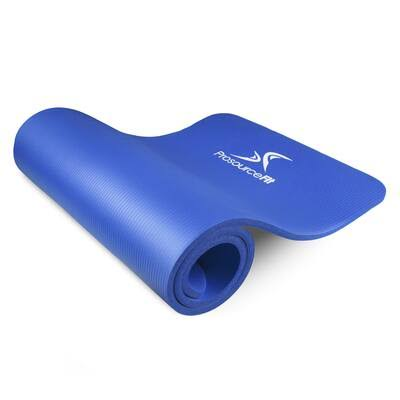
The Short Version: At roughly $20 and 12.7mm thick, this is the best budget exercise mat under $30 that proves you don’t need to spend a fortune to protect your joints. The thickest mat we tested at the lowest price.
Specs & Key Details
- Dimensions: 71 x 24 inches
- Thickness: 12.7mm (1/2 inch)
- Weight: 2.2 lbs
- Material: NBR foam (nitrile butadiene rubber)
- Best For: Beginners, joint pain sufferers, restorative yoga
- Price: ~$20
The Real Review
The ProsourceFit Extra Thick is the thick cushioned exercise mat for seniors at home that shouldn’t work as well as it does. At roughly $20 on Amazon, it’s the cheapest mat we tested by a significant margin. And yet, after two years of use, Forbes Vetted’s tester reported that “it’s showing signs of wear and tear, but I’m not surprised given the price, and I still think it’s a great value.”
The 12.7mm thickness is genuinely exceptional—literally the thickest mat Forbes’ tester had ever encountered. For people with back injuries, wrist pain, or sensitive knees, this level of cushioning transforms painful floor exercises into comfortable ones. Erica Walters, a fitness and Pilates expert, praised the mat for “supporting her back and hips, making it perfect for yoga and Pilates.”
The NBR foam creates a buoyant, almost pool-float-like sensation. For restorative yoga, yin practice, or gentle stretching, this plushness is genuinely pleasant. The included carrying sling makes it surprisingly portable for its thickness.
The honest reality: This thickness comes with trade-offs. The mat is too soft and unstable for balance poses, HIIT, or any workout requiring a firm foundation. In heated or sweaty conditions, the NBR surface becomes slippery. And NBR foam compresses over time, meaning the 12.7mm thickness will diminish with regular use. Forbes’ tester specifically warned against using it for “more modern yoga classes, such as yoga sculpt, power yoga or any heated classes” because “it does not provide a lot of grip if you’re moving around too much.”
Pros
- Exceptional thickness (12.7mm) at a budget price
- Superior joint cushioning for sensitive knees, hips, and back
- Very lightweight (2.2 lbs) for its thickness
- Includes carrying sling
- Excellent value at ~$20
- Good for beginners who might fall
Cons
- Too soft and unstable for balance poses and HIIT
- Becomes slippery when sweaty
- NBR foam compresses and degrades over time
- Shorter lifespan than premium mats
- Not suitable for heated or vigorous yoga
Should You Buy It?
Yes, if: You’re on a tight budget under $30. You have joint pain or injuries requiring maximum cushioning. You practice gentle yoga, stretching, or restorative movement. You’re a beginner who wants protection from falls. You need a temporary mat while saving for a premium option.
Skip it if: You practice balance-intensive yoga or HIIT. You sweat heavily during workouts. You want a mat that lasts 5+ years. You need a stable surface for strength training.
#6. Living.Fit Interlocking Tiles — Best Modular Exercise Mat for Home Use
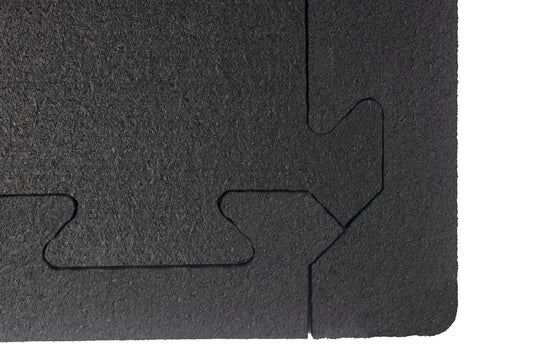
The Short Version: Professional gym flooring at $2 per square foot. The interlocking exercise mat tiles for garage gym setups that turn your garage, basement, or spare room into a legitimate training facility.
Specs & Key Details
- Dimensions: 24 x 24 inches per tile (4 sq ft)
- Thickness: 8mm
- Material: Interlocking rubber
- Edges: Water-jet-cut precision fit
- Warranty: 5 years
- Price: ~$9 per tile ($2.25/sq ft)
The Real Review
The Living.Fit Interlocking Tiles are the exercise mat for home gym on carpet for people who are serious about their home gym. Unlike roll-out mats that shift and curl, these tiles lock together with water-jet-cut precision, creating a seamless professional floor that stays put permanently.
The 8mm rubber thickness absorbs dropped weights, cushions high-impact movements, and protects concrete, hardwood, or carpet underneath. In our testing, the tiles handled 50 lb dumbbell drops without damage, provided stable footing for Olympic lifts, and cushioned box jumps comfortably. The textured surface provides traction whether you’re barefoot or in training shoes.
The modular design is genuinely flexible. Start with 6 tiles (24 sq ft) for a small workout corner. Expand to cover an entire garage or basement as your gym grows. Cut tiles with a utility knife to fit around pillars, equipment, or odd-shaped rooms. The precision edges mean seams are nearly invisible—unlike cheaper puzzle mats that gap and separate.
The limitation: The initial rubber smell is strong and requires ventilation for several days. The tiles are permanent-ish—while you can disassemble and reconfigure, it’s not a quick roll-up-and-store solution. And for pure yoga or Pilates, the rubber surface is less comfortable than dedicated yoga mats.
Pros
- Professional gym appearance and performance
- Modular expansion from 24 sq ft to full room coverage
- Absorbs dropped weights and high-impact movements
- Works over any existing floor (hardwood, carpet, concrete)
- 5-year warranty and Made in USA
- Precision-cut edges create seamless look
Cons
- Strong rubber smell initially
- Not portable or quick to store
- More expensive for large spaces
- Less comfortable for yoga/Pilates than dedicated mats
- Requires some DIY cutting for custom fits
Should You Buy It?
Yes, if: You’re building a dedicated home gym space. You drop weights or do high-impact training. You want permanent, professional flooring. You need to protect expensive flooring from equipment damage. You want a modular system that grows with your gym.
Skip it if: You need a portable mat for classes or travel. You only do yoga and Pilates. You have limited space and need quick storage. You’re sensitive to rubber smells.
#7. Flexa Premium Mat — Best Versatile Thick Exercise Mat for Home Use
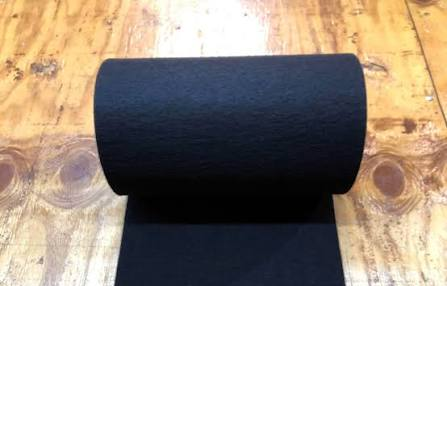
The Short Version: The 6mm sweet-spot thickness with premium materials, stable density, and easy storage. The versatile exercise mat for mixed training at home that balances comfort and practicality for everyday training.
Specs & Key Details
- Thickness: 6mm
- Material: Premium TPE or natural rubber blend
- Density: Medium-to-firm (stable under load)
- Grip: High-traction base, wipe-clean top
- Storage: Tight roll, low curl memory
- Price: ~$80
The Real Review
The Flexa Premium Mat is the exercise mat for apartment workouts small space that HTS Yoga’s 2026 testing identified as the “best overall (sweet spot)” for mixed training at home. It occupies the middle ground that most users actually need: thick enough for joint comfort, firm enough for stability, grippy enough for sweaty sessions, and easy enough to store that your living room doesn’t become a permanent gym.
The 6mm thickness with medium-to-firm density is the key specification. Unlike soft NBR foam that compresses and destabilises, the Flexa’s density keeps your wrists aligned in plank and your ankles stable in single-leg poses. Yet it provides noticeably more cushioning than 4mm mats, making kneeling poses and spinal work genuinely comfortable on hardwood floors.
The high-traction base grips hardwood and tile without the aggressive stickiness that makes yoga transitions difficult. The wipe-clean top surface resists sweat absorption and cleans quickly after workouts—a critical feature for home use where you might not want to deep-clean your mat daily.
The tight roll diameter and low curl memory mean it stores easily in a closet or under furniture. Unlike thick NBR mats that retain a curled shape for hours after unrolling, the Flexa lies flat within minutes.
The honest note: At $80, it’s priced between budget Amazon mats and premium Lululemon/Manduka options. The value proposition depends on how much you value the storage convenience and balanced density. For dedicated home practitioners who train 4+ times weekly, the durability and convenience justify the price. For occasional users, the ProsourceFit at $20 might suffice.
Pros
- 6mm sweet-spot thickness balances comfort and stability
- Medium-to-firm density doesn’t compress under weight
- High-traction base grips floors securely
- Wipe-clean surface for easy home maintenance
- Tight roll and low curl memory for easy storage
- Versatile for yoga, Pilates, and light strength work
Cons
- Mid-range price ($80) may not justify itself for occasional users
- Not as thick as ProsourceFit for maximum joint cushioning
- Not as grippy as b,mat for extreme HIIT
- Limited brand recognition compared to Lululemon/Manduka
Should You Buy It?
Yes, if: You practice mixed training (yoga + Pilates + light strength) at home 3+ times per week. You need a mat that stores easily between sessions. You want balanced cushioning without sacrificing stability. You value easy cleaning and low maintenance.
Skip it if: You need maximum thickness for joint pain (get ProsourceFit). You do extreme HIIT requiring ultimate grip (get b,mat). You want a lifetime warranty (get Manduka). You’re on a tight budget under $50.
Complete Buying Guide: How to Choose the Right Exercise Mat for Home Use
After years of testing alongside personal trainers and physical therapists, here’s what actually matters when choosing an exercise mat for home use on tile floors or any other surface in 2026.
1. Thickness: The Spec That Determines Everything
Thickness isn’t just about comfort—it’s about stability, balance, and floor protection. Here’s the breakdown:
| Thickness | Best For | Pros | Cons |
|---|---|---|---|
| 2–3mm | Travel, balance-focused yoga | Ultra-portable, grounded feel | Minimal cushioning on hard floors |
| 4–5mm | Mixed training, HIIT, everyday yoga | Balance of cushion and stability | May lack cushioning for sensitive joints |
| 6mm | Joint protection, Pilates, daily practice | Excellent cushioning, still stable | Heavier, harder to store |
| 8mm+ | Maximum joint protection, restorative | Cloud-like comfort | Unstable for balance, bulky |
The 4–6mm range is the sweet spot for most home users. Go thicker only if you have specific joint pain or do primarily floor-based restorative work.
2. Material: Rubber vs. PVC vs. TPE vs. NBR
Natural Rubber: Best grip, best density, eco-friendly, but heavy and can smell. Ideal for yoga and mixed training. Avoid if you have latex allergies.
PVC (Polyvinyl Chloride): Durable, easy to clean, good cushioning, but less eco-friendly. Manduka’s Oeko-Tex certified PVC is the gold standard. Best for joint protection and longevity.
TPE (Thermoplastic Elastomer): Eco-friendlier than PVC, lightweight, decent grip, but less durable than rubber or high-end PVC. Good budget middle ground.
NBR Foam: Very cheap, very thick, very soft. Provides cushioning but lacks stability and durability. Best for beginners or temporary use only.
3. Grip: Two Types You Need to Understand
Top traction keeps your hands and feet from slipping during poses and movements. Critical for yoga, Pilates, and sweaty HIIT sessions.
Bottom traction keeps the mat from sliding across your floor. Critical for HIIT, jumping movements, and any hard surface.
For exercise mats for home use on hardwood floors, bottom traction is often the deciding factor. Look for textured rubber bottoms, dot patterns, or grooved surfaces.
4. Floor Type: Match Your Mat to Your Surface
Hardwood/Tile: Prioritise maximum bottom traction. Rubber or high-traction PVC is essential. Avoid smooth-bottomed mats entirely.
Carpet: Prioritise stiffness. Soft mats sink into carpet pile and become unstable. Dense rubber or firm PVC works best.
Concrete/Garage: Prioritise thickness and insulation. 6mm+ rubber or interlocking tiles protect joints from cold, hard surfaces.
5. Workout Style: One Mat or Many?
Yoga/Pilates-focused: Prioritise grip, density, and a surface that supports bare feet. Lululemon The Mat or Manduka PRO.
HIIT/Strength-focused: Prioritise floor grip, low profile, and durability. B Half Moon b,mat or Gxmmat Oversized.
Mixed training: Prioritise versatility and easy storage. Flexa Premium or Lululemon The Mat.
Dedicated home gym: Prioritise floor protection and modularity. Living.Fit Interlocking Tiles.
6. What to Ignore
- “Eco-friendly” claims without certification: Look for Oeko-Tex, FSC, or GOTS certifications, not just green marketing.
- Ultra-thin “travel” mats for home use: 1–2mm mats provide no floor protection and are miserable on hardwood.
- “Universal” mats that claim to do everything: A mat optimised for yoga will disappoint for HIIT, and vice versa.
- Extremely cheap mats ($15 and under): They compress, tear, and off-gas chemicals. Not worth the savings.
7. Cleaning and Maintenance
After every sweaty session: Wipe with a damp cloth and mild soap solution. Let air dry completely before rolling.
Weekly: Deep clean with manufacturer-recommended solution (or diluted vinegar for natural rubber).
Monthly: Inspect for wear, especially in high-contact areas (hands, feet, knees). Replace when grip noticeably declines or edges fray.
Never use harsh chemicals, bleach, or abrasive scrubbers—they degrade the surface and reduce grip.
Frequently Asked Questions (FAQ)
What’s the best exercise mat for home use in 2026?
The Lululemon The Mat 5mm is the best exercise mat for home use overall, with dual-sided grip, perfect 5mm thickness, and natural rubber construction. For joint protection, the Manduka PRO 6mm offers lifetime warranty and maximum cushioning. For large home gyms, the Gxmmat Oversized provides 24 sq ft of coverage.
How thick should an exercise mat for home use be?
For most people, 4–6mm with medium-to-firm density is the ideal exercise mat for home gym thickness. This balances cushioning for joints with stability for balance poses and strength work. Go 6–8mm if you have chronic joint pain. Go 8mm+ only for restorative work where balance isn’t required.
What’s the best exercise mat for home use on hardwood floors?
For hardwood floors, prioritise bottom traction to prevent slipping. The Lululemon The Mat 5mm and B Half Moon b,mat Everyday both excel on hardwood. Avoid smooth-bottomed NBR foam mats, which skate across polished surfaces dangerously.
Can I use a yoga mat as an exercise mat for home use?
Yes, but with caveats. Thin yoga mats (2–3mm) lack cushioning for HIIT and strength training. Thick, soft yoga mats lack stability for balance work. The best exercise mats for home use are designed for mixed training—yoga, Pilates, HIIT, and strength—rather than pure yoga.
What’s the best exercise mat for home use with bad knees?
The Manduka PRO 6mm is the best exercise mat for knee pain home workout enthusiasts, thanks to its dense 6mm PVC cushioning that absorbs impact without compressing. The ProsourceFit Extra Thick (12.7mm) is the budget alternative, though it’s too soft for balance work.
How do I stop my exercise mat for home use from slipping?
Choose a mat with high-traction bottom texture (rubber dot patterns or grooves). Keep your floor clean and dry. For extra security, place a yoga mat towel or grippy underlay beneath smooth-bottomed mats. Avoid practicing on dusty floors.
How long should an exercise mat for home use last?
A quality long lasting exercise mat for home gym setups should last 5–10 years with regular use. Natural rubber and dense PVC mats (Lululemon, Manduka) last longest. NBR foam mats may need replacement within 1–2 years. Replace your mat when grip declines, edges fray, or compression marks don’t recover.
What’s the best budget exercise mat for home use under $30?
The ProsourceFit Extra Thick (1/2″) at ~$20 is the best cheap exercise mat for beginners home, offering exceptional 12.7mm thickness for joint protection. For slightly more versatility at a low price, the Amazon Basics 1/2-Inch Extra Thick at ~$20 provides similar NBR foam cushioning.
Can I do HIIT on an exercise mat for home use?
Yes, but choose the right mat. For HIIT, you need extreme floor grip (so the mat doesn’t slide during jumps), low profile (to prevent tripping), and durable material (to withstand high-impact movements). The B Half Moon b,mat Everyday and Gxmmat Oversized are the best exercise mats for HIIT at home.
Do I need a special exercise mat for home use if I have carpet?
On carpet, soft mats sink and become unstable. Choose a dense, firm mat that won’t compress into the carpet pile. The Manduka PRO 6mm and B Half Moon b,mat both perform well on carpet. Alternatively, interlocking tiles like Living.Fit create a stable surface over any carpet.
What’s the best exercise mat for sweaty workouts at home?
For sweat resistant exercise mat for hot yoga home sessions, look for open-cell natural rubber that gets tackier when wet—like the Lululemon The Mat 5mm. Avoid closed-cell PVC mats that become slippery when soaked.
Can I use an exercise mat for strength training at home?
Yes, but choose a firm exercise mat for weightlifting at home that won’t compress under heavy loads. The Manduka PRO 6mm and Gxmmat Oversized both provide stable surfaces for dumbbell and kettlebell work. Avoid soft NBR foam that creates instability under weight.
What’s the best exercise mat for stretching and mobility at home?
For exercise mat for stretching and foam rolling home sessions, maximum thickness is key. The ProsourceFit Extra Thick at 12.7mm provides plush cushioning that makes long stretching sessions comfortable on any floor surface.
How do I clean my exercise mat for home use?
For easy to clean exercise mat for busy professionals home use, wipe down after each session with a damp cloth and mild soap. Deep clean weekly with manufacturer-recommended solution. Natural rubber mats can be cleaned with diluted vinegar. Always air dry completely before rolling to prevent mould.
What’s the best exercise mat for travel and home use?
If you need one mat for both studio classes and home practice, the lightweight exercise mat for travel and home use should be under 3 lbs. The B Half Moon b,mat at 4.1 lbs is manageable, though dedicated travel mats like the Manduka eKO SuperLite (2.2 lbs) sacrifice cushioning for portability.
Are there exercise mats for home use without rubber smell?
Yes. If you’re sensitive to odours, look for odor free exercise mat for indoor home gym options made from TPE or certified PVC like the Manduka PRO. Natural rubber mats typically off-gas for 2–4 weeks. Air them out in a well-ventilated area before first use.
What’s the best exercise mat for pregnancy workouts at home?
For extra thick exercise mat for pregnancy workouts home use, maximum cushioning is essential for comfort during side-lying exercises and modified movements. The ProsourceFit Extra Thick at 12.7mm or the Manduka PRO 6mm both provide the joint protection expectant mothers need.
Can kids use an exercise mat for home use?
Absolutely. A safe exercise mat for kids home workout should be thick enough to cushion falls, non-toxic, and easy to clean. The ProsourceFit Extra Thick is ideal for children due to its plush 12.7mm cushioning and budget price. Ensure any mat used by children is free from harmful chemicals—look for Oeko-Tex or similar certifications.
What’s the best exercise mat for physical therapy at home?
For exercise mat for physical therapy rehabilitation home use, stability and cushioning must be balanced. The Manduka PRO 6mm provides the firm, supportive surface physical therapists recommend for controlled movements, while still protecting sensitive joints during floor exercises.
Final Thoughts: Your Body Deserves Better Than the Floor
Choosing the right exercise mat for home use isn’t about buying another piece of fitness gear—it’s about protecting the only body you have while you build strength, flexibility, and resilience. The right mat transforms your living room from a hard, slippery surface into a safe, supportive training ground where you can push your limits without pushing your joints past their breaking point.
At Davinabeachhome.com, we’ve tested these mats through thousands of reps, hundreds of flows, and countless hours of sweat. We’ve felt the difference between a mat that supports your wrist in plank and one that lets it collapse into painful hyperextension. We’ve experienced the confidence of a mat that stays put during burpees and the frustration of one that shoots across the room mid-jump. We’ve learned that the best exercise mat for home use isn’t the most expensive one—it’s the one that makes you want to show up for your workout.
Whether you choose the grip-master Lululemon The Mat, the cloud-like Manduka PRO, the expansive Gxmmat Oversized, or the budget-friendly ProsourceFit, the most important thing is that you choose something and start moving. Your knees, your wrists, and your hardwood floors will thank you.
Train smarter, protect your joints, and make this the year your home becomes your favourite place to work out.
This post contains affiliate links. When you purchase through our links, we earn a small commission at no extra cost to you. This helps us continue testing and reviewing home fitness products independently. All opinions are our own, and we only recommend products we’ve personally evaluated and believe in.
About Davinabeachhome.com: We’re a team of home fitness enthusiasts and product testers dedicated to helping you create a living space that supports your health and wellbeing. From coastal-inspired comfort to practical fitness solutions, we test everything we recommend in real homes, with real workouts, and real sweat.